Understanding Scoliosis in Children: A BACK-to-School Guide
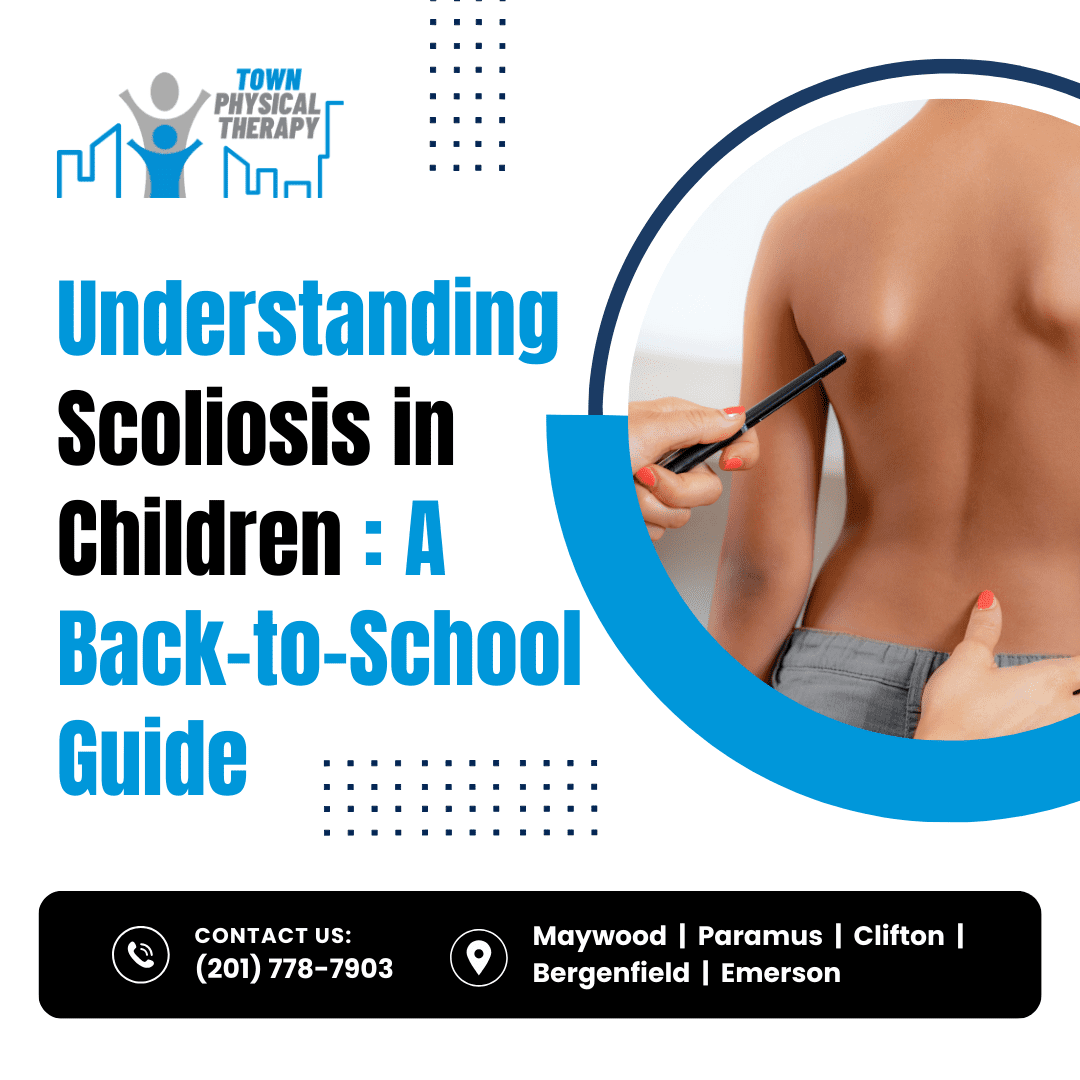
As the school year begins, parents focus on supplies, schedules, and classroom readiness. But there’s one important area that often gets overlooked: spinal health. Many children develop scoliosis—a sideways curvature of the spine—during growth spurts, and early recognition is critical for prevention and treatment. This guide from Town Physical Therapy explains what parents need to know and how to support children as they head back to school.
What Is Scoliosis?
Scoliosis is not just poor posture—it’s a structural condition where the spine curves sideways, often forming a “C” or “S” shape. It can appear in the upper back (thoracic), lower back (lumbar), or both. While mild curves may go unnoticed, more pronounced curvatures can affect posture, balance, and physical activity.
Key facts about pediatric scoliosis:
- Often develops between ages 10–15 during rapid growth.
- Girls are more commonly affected than boys.
- Most cases are idiopathic, meaning there’s no known cause.
- Early detection allows for non-surgical treatment options.
How to Spot the Signs
Children may not experience pain in early stages, so parents should watch for subtle indicators:
- One shoulder or hip appears higher than the other
- Clothes hang unevenly
- Child leans to one side when standing
- Prominent ribs or a “rib hump” when bending forward
- Fatigue during prolonged sitting or physical activity
If you notice any of these signs, a professional evaluation is recommended.
Back-to-School Considerations
The school environment can impact children with scoliosis. Heavy backpacks, long hours at desks, and prolonged sitting may contribute to strain. Here’s how to keep your child’s spine healthy:
1. Backpack Safety
Choose backpacks with wide, padded straps and teach your child to wear both straps. Keep the backpack weight to no more than 10–15% of your child’s body weight.
2. Proper Sitting Posture
Encourage sitting with feet flat on the floor and back supported by the chair. Small adjustments during homework or reading can prevent fatigue and spinal strain.
3. Movement and Activity
Frequent breaks for stretching and walking can reduce tension. Participation in low-impact sports such as swimming, yoga, or Pilates strengthens back and core muscles.
Diagnosis and Treatment
A pediatrician or physical therapist can screen for scoliosis during routine check-ups. Common methods include:
- Physical Exam: Observation of posture and spinal alignment
- Adam’s Forward Bend Test: Highlights spinal asymmetry
- Imaging: X-rays confirm the curve and guide treatment planning
Treatment approaches at Town Physical Therapy:
- Observation: Mild curves are monitored with regular check-ups.
- Physical Therapy: Tailored exercises strengthen the back, improve posture, and enhance flexibility.
- Bracing: For moderate curves, a brace can prevent worsening while allowing children to stay active.
- Specialist Referral: Severe curves may require consultation with a pediatric orthopedic surgeon.
Physical therapy is often the first line of defense, helping children stay mobile, confident, and active throughout the school year.
FAQs About Pediatric Scoliosis
Q1: Will my child need surgery?
Most children do not require surgery. Physical therapy and bracing are effective for managing mild to moderate scoliosis.
Q2: Can my child play sports?
Yes! Physical activity is encouraged. Low-impact exercises help support spinal health, and participation can continue even with a brace.
Q3: How often should scoliosis be monitored?
Typically, every 4–6 months during growth spurts, or more frequently if advised by a clinician.
Q4: Does scoliosis cause pain?
Early-stage scoliosis is usually painless. Discomfort may occur in advanced cases or if poor posture strains muscles.
How Town Physical Therapy Helps
At Town PT, we provide a child-focused approach to scoliosis management:
- Comprehensive evaluations and ongoing monitoring
- Personalized physical therapy programs tailored to school activities
- Education for parents and children on posture, strength, and daily habits
- Support for ergonomic adaptations, backpack safety, and safe sports participation
Scoliosis can develop quietly in children, but early intervention makes a big difference. With awareness, proper posture, safe activity, and professional support from Town Physical Therapy, your child can enjoy a healthy, active, and confident school year.
Don’t wait—call us or book your appointment today to keep your child’s spine strong for the school year!
About the Author: Town PT