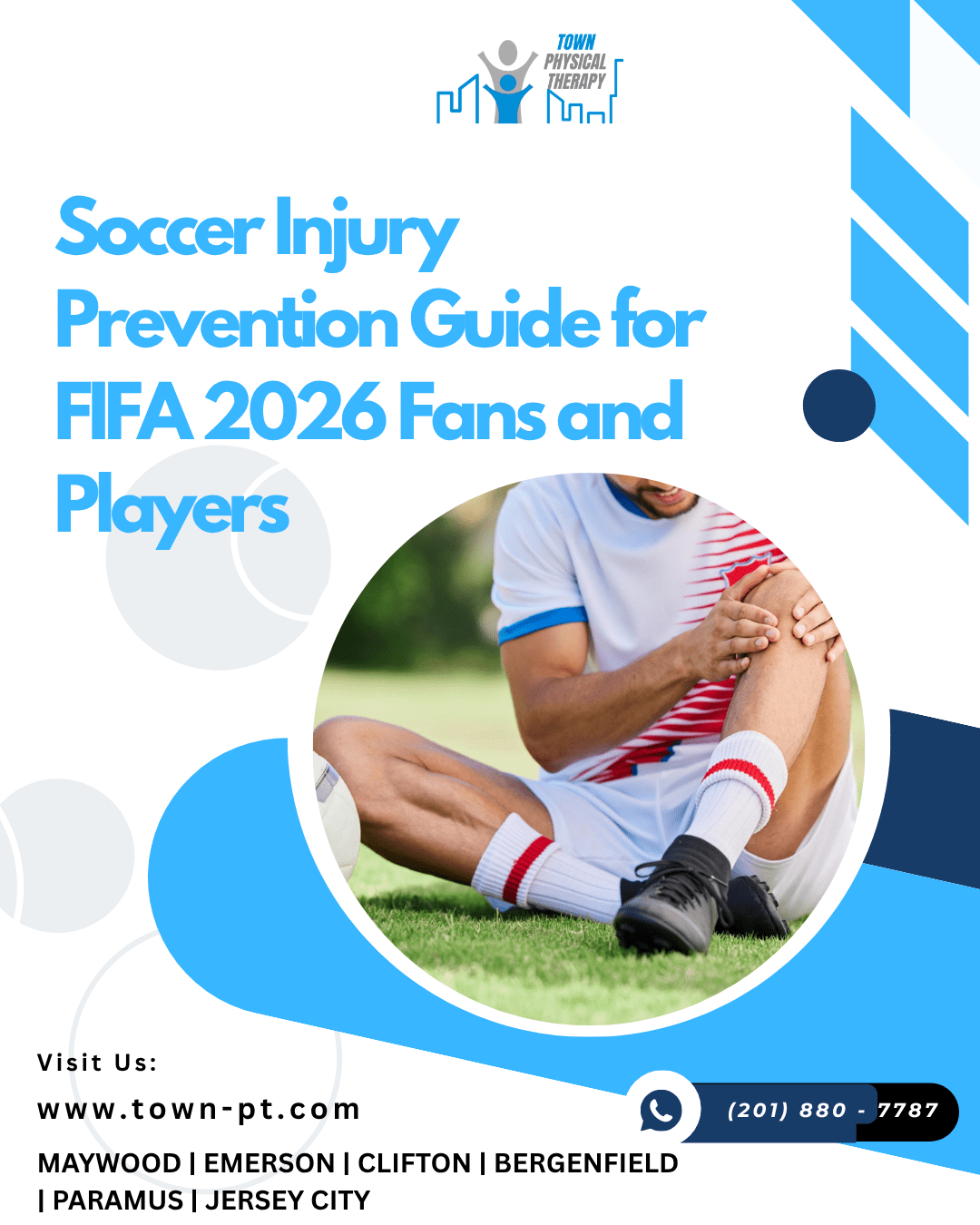
Soccer Injury Prevention Guide for FIFA 2026 Fans and Players
How to Stay Active, Safe, and Injury-Free During the Biggest Soccer Event in the World
The FIFA World Cup 2026 is expected to bring global attention to the United States, with one of the major venues being MetLife Stadium in New Jersey. The event will inspire millions of people to watch, play, and participate in soccer-related activities throughout the region.
With increased participation in recreational soccer, local leagues, and casual games, there is also a higher chance of minor sports injuries such as strains, sprains, and overuse pain.
This guide explains simple injury prevention strategies and what to do if pain or discomfort occurs.
Why FIFA 2026 Will Increase Soccer Activity in New Jersey
Major sporting events often influence local activity. During FIFA 2026, many people will:
- Join recreational soccer games
- Play after long periods of inactivity
- Participate in community events or watch parties with physical activity
- Try higher-intensity sports than usual
This sudden increase in movement can sometimes lead to muscle strain or joint discomfort, especially in beginners or casual players.
Common Soccer-Related Injuries
Even in casual play, soccer involves running, turning, and sudden stops that can stress the body.
Most common issues include:
1. Ankle Sprains
- Caused by twisting or landing awkwardly
- May lead to swelling and temporary pain
2. Knee Pain
- From sudden direction changes or overuse
- Can feel stiff or sore after activity
3. Muscle Strains
- Common in hamstrings or thighs
- Often occur during sprinting or quick movements
4. Lower Back Discomfort
- From bending, twisting, or weak core support
- Common in people returning to sports after inactivity
Why These Injuries Happen
Most soccer-related discomfort happens due to:
- Lack of warm-up before activity
- Sudden increase in physical activity
- Poor flexibility or strength
- Fatigue during play
The good news is that most of these issues are preventable with simple habits.
Injury Prevention Tips for FIFA Season
1. Warm Up Before Playing
A proper warm-up helps prepare muscles:
- Light jogging for 5–10 minutes
- Gentle stretching
- Movement drills like side steps or lunges
2. Don’t Overplay
Avoid playing multiple intense games in a short time without rest.
3. Build Basic Strength
Simple exercises help protect joints:
- Squats
- Core exercises
- Hamstring stretches
- Calf strengthening
4. Stay Hydrated
Hydration helps reduce fatigue and muscle cramps.
5. Pay Attention to Pain
Do not ignore discomfort — early care helps prevent worsening issues.
Role of Physical Therapy in Injury Recovery
If discomfort persists after activity, physical therapy can help restore normal movement and reduce pain.
At Town Physical Therapy, the focus is on helping patients improve mobility, strength, and function through personalized care.
According to their services outlined on town-pt.com, the clinic provides general musculoskeletal and rehabilitation care designed to help individuals recover from everyday injuries and movement-related pain.
Common Areas of Care Include:
- Back and neck pain
- Joint stiffness
- Muscle strains
- Post-activity soreness
- Mobility limitations
Treatment is tailored to each patient’s condition and focuses on improving movement and reducing discomfort.
What Patients Can Expect
At Town Physical Therapy, care typically includes:
- Movement assessment
- Manual therapy techniques
- Exercise-based rehabilitation
- Strength and mobility improvement plans
- Education on injury prevention
The goal is to help patients return to normal activity safely and comfortably.
Key Takeaway
The FIFA World Cup 2026 will encourage more people to stay active and participate in soccer-related activities.
By warming up properly, avoiding overexertion, and paying attention to early signs of discomfort, most minor injuries can be prevented.
If issues do occur, early evaluation from a physical therapy clinic can help improve recovery and movement.
About the Author: Town PT