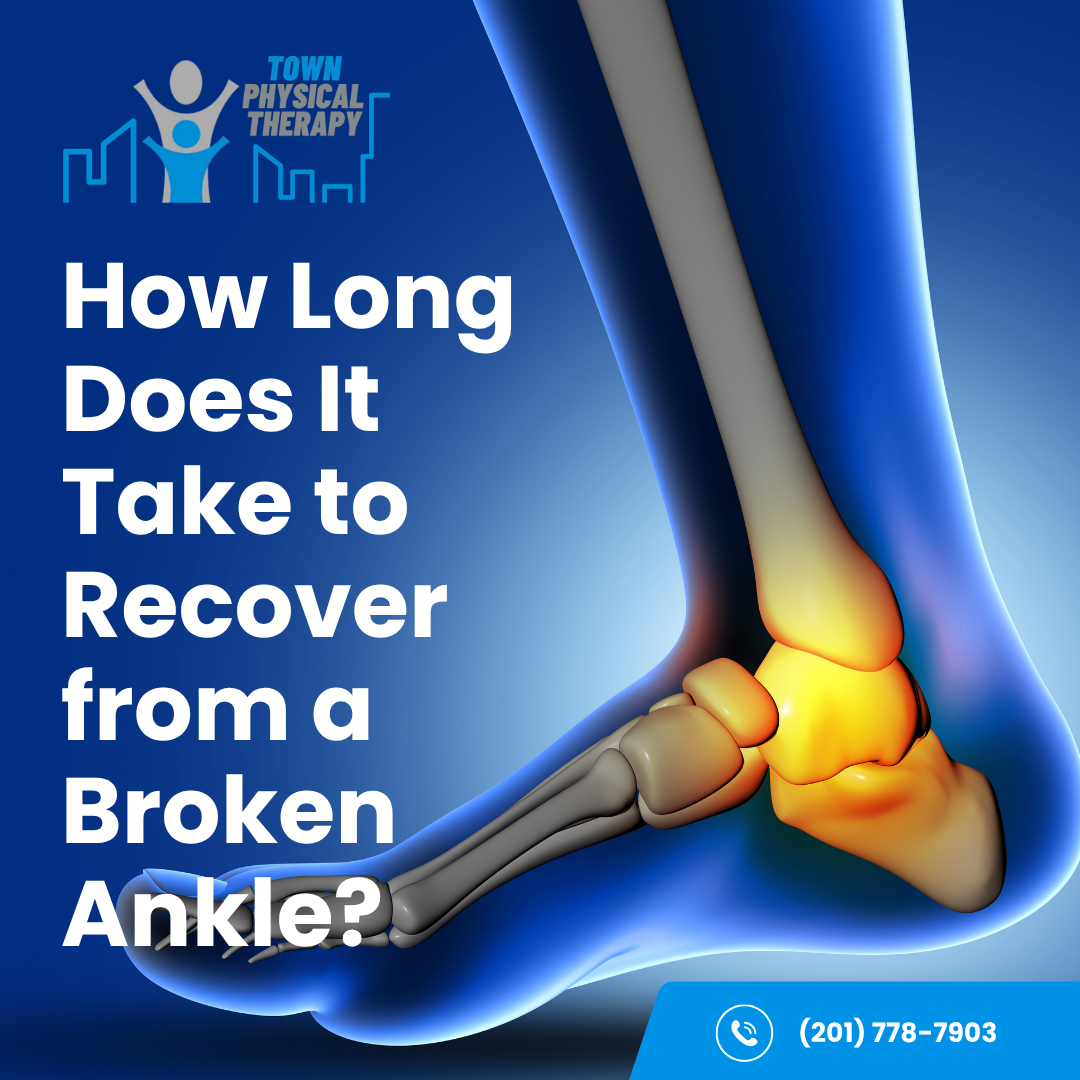
How Long Does It Take to Recover from a Broken Ankle?
Most broken ankles take 6 to 12 weeks to heal at the bone level, and 3 to 6 months to fully recover function, meaning your strength, balance, and range of motion are back to normal. Severe fractures, or ones that need surgery, can take up to a year for complete recovery. The single biggest factor in how fast — and how fully — you recover is whether you get into physical therapy early and stick with it.
If you’re staring down a walking boot right now wondering when life gets back to normal, here’s the honest, stage-by-stage answer.
What Determines How Fast Your Ankle Heals
Not all broken ankles are created equal. A few factors that push your recovery faster or slower:
- Type and severity of the fracture – A single, stable break (like an isolated lateral malleolus fracture) heals faster than a trimalleolar fracture involving multiple bones.
- Surgery vs. no surgery – Surgically repaired fractures often need a longer initial protection phase before weight-bearing starts.
- Age and bone health – Younger patients and those without conditions like osteoporosis generally heal faster.
- Smoking status – Smoking measurably slows bone healing; quitting (even temporarily) helps.
- How closely you follow your care plan – Skipping PT sessions or rushing weight-bearing before you’re cleared is one of the most common causes of re-injury and setbacks.
Stage 1: The First 6 Weeks — Protecting the Bone
Right after your injury or surgery, your body’s main job is laying down new bone. This stage is usually the hardest emotionally, because progress feels invisible.
What to expect:
- Cast, splint, or walking boot
- Crutches or a knee scooter — little to no weight on the ankle
- Swelling and bruising that can look alarming but is normal
- R.I.C.E. (Rest, Ice, Compression, Elevation) to manage swelling and pain
What actually helps here: Elevating the ankle above heart level as often as you can, gentle toe and knee movement to keep blood flowing, and resisting the urge to test weight on it before your doctor clears you.
Stage 2: Weeks 6–8 — Learning to Bear Weight Again
Once imaging shows enough healing, your doctor will clear you for progressive weight-bearing. This is usually where physical therapy formally starts, and it’s a turning point in recovery.
What to expect:
- Transition from a boot to supported walking, often with a cane
- The ankle will likely feel stiff, weak, and “not like yours” — that’s expected after weeks of immobilization
- Your PT starts gentle range-of-motion work and light strengthening
This stage is where physical therapy earns its keep. Bones can heal fine on their own, but the muscles, tendons, and ligaments around the joint don’t rebuild themselves. Without guided rehab, it’s common to end up with lingering stiffness, weakness, or an ankle that “gives out” months later.
Stage 3: Weeks 8–12 — Rebuilding Strength and Balance
This is the active rehab phase, and it’s where most of the functional recovery happens.
A typical broken ankle PT program includes:
- Range-of-motion exercises to restore full ankle mobility
- Progressive strengthening (resistance bands, calf raises, targeted ankle work)
- Balance and proprioception training — this is often the most overlooked piece, and the one most linked to re-injury if skipped
- Gait retraining to correct the limp or compensations you picked up while immobilized
By the end of this stage, most patients are walking without a limp, though full strength and confidence are still a work in progress.
Stage 4: Months 3–6 — Return to Full Activity
By this point, bone healing is typically complete, and rehab shifts toward higher-level function: jumping, cutting, running, or returning to your sport.
Your physical therapist will guide this progression carefully. Going from “walking normally” to “playing pickup basketball” too fast is one of the most common ways people re-injure a healed ankle. A good PT program tests your strength and balance against your uninjured side before clearing you for high-impact activity — not just how many weeks have passed.
Complex or Surgical Fractures: Plan for 6–12 Months
If your fracture required surgical fixation (plates, screws, or pins) or involved multiple bones, your timeline stretches out. Expect a longer non-weight-bearing period, closer follow-up imaging, and a rehab program built around your specific hardware and healing pace. Full recovery, including return to sport or physically demanding work, can take up to a year in these cases.
Why Physical Therapy Makes Such a Big Difference
Patients often ask whether PT is really necessary if the ankle “feels fine.” Here’s the honest answer: a fracture that heals well on an X-ray can still leave you with a weak, stiff, or unstable ankle if the surrounding tissue isn’t rehabbed properly. Physical therapy is what closes that gap. At Town Physical Therapy, treatment plans are built around your specific fracture, your goals, and your timeline — not a generic checklist — so you’re not just healed, you’re actually back to moving with confidence.
Frequently Asked Questions
1. How long does a broken ankle take to heal?
Bone healing generally takes 6 to 12 weeks, but full functional recovery — regaining strength, balance, and range of motion — typically takes 3 to 6 months, and up to a year for severe or surgical fractures.
2. When can I start walking on a broken ankle?
Most people begin protected weight-bearing around 6 to 8 weeks after injury, once imaging confirms enough healing. Walking without support usually follows a few weeks after that, depending on fracture severity.
3. Does physical therapy speed up broken ankle recovery?
Yes. While PT doesn’t speed up bone healing itself, it significantly speeds up and improves functional recovery — restoring strength, range of motion, and balance, and reducing the risk of re-injury or long-term stiffness.
4. How long until I can run or play sports again after a broken ankle?
Most patients return to running or sports between 3 and 6 months post-injury, though this depends heavily on fracture severity and how consistently rehab was followed. Your physical therapist should clear you based on strength and balance testing, not just a calendar date.
5. What happens if I skip physical therapy after a broken ankle?
Skipping PT increases the risk of chronic stiffness, persistent weakness, an unstable “giving way” ankle, and re-injury. The bone may heal, but the muscles and ligaments around it often don’t recover fully without guided rehab.
Ready to Get Back on Your Feet?
Every broken ankle is different, and so is every recovery plan. If you’re navigating a fracture and want a rehab program built specifically around your injury and goals, Town Physical Therapy is here to help.
About the Author: Town PT